
Weight and Height Limits for Flight Lessons: What to Know Before You Book
Isaac Prestwich, CFII · November 10, 2026
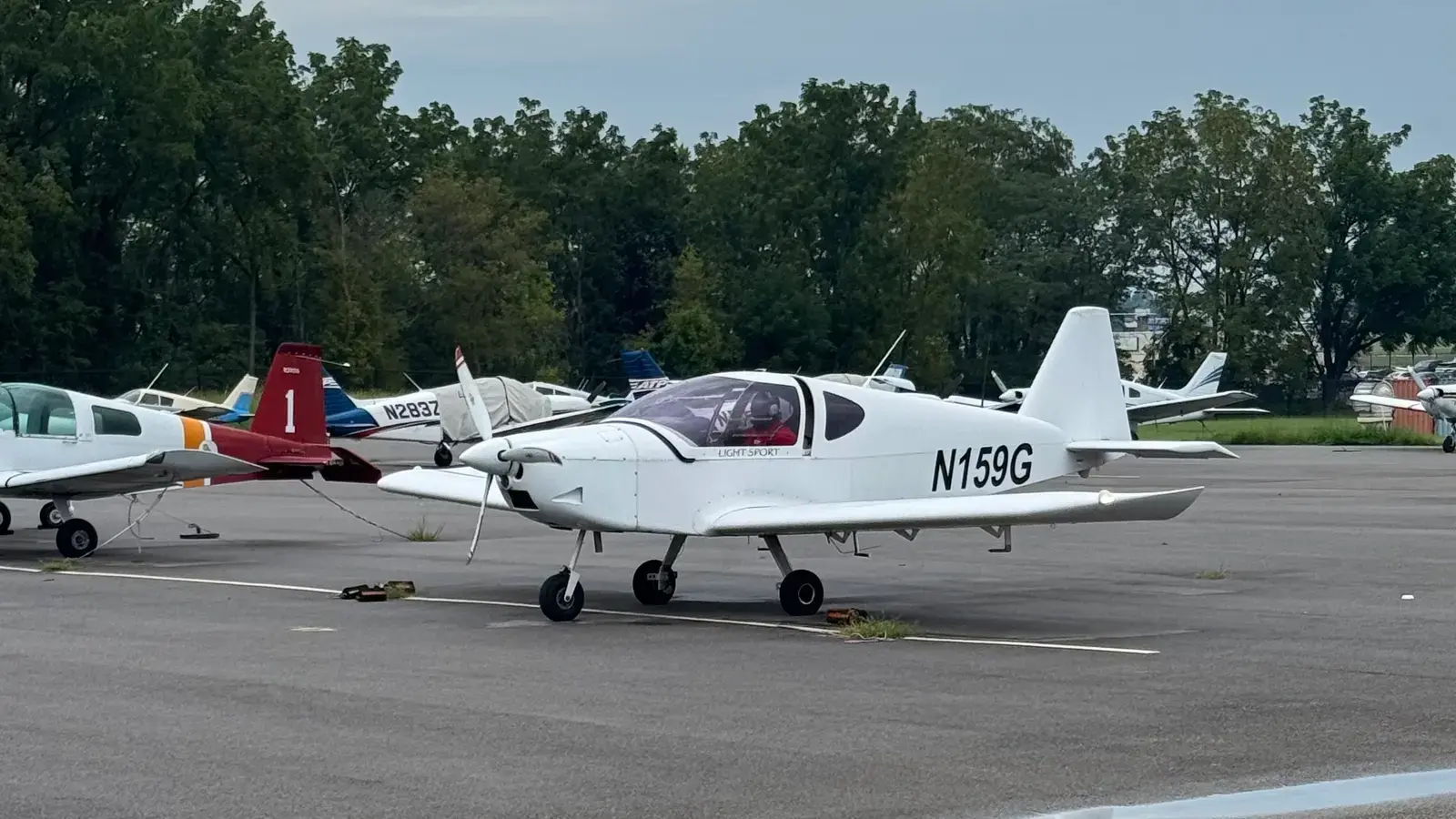
At Merlin Flight Training, anyone 16 or older who weighs 250 lb or less can fly a discovery flight in our airplane. We don't publish a height limit, because there's no fixed number: how you fit depends on your build, and the way to find out is to sit in the airplane.
Both answers come from the airplane. They don't come from the FAA, and they aren't an opinion about you. Here's how the limits work, why we ask for your weight when you book, and what to do if you're close to the number.
Is there a weight limit for flying lessons?
Yes, at every flight school, because every airplane has one. The manufacturer sets a maximum weight for each aircraft and a range for where that weight can sit, and the pilot has to stay inside both.
What changes from school to school is the number. A limit you read on another school's website belongs to that school's airplane. It doesn't apply to ours, and ours doesn't apply to theirs.
Here's what we publish for our airplane:
- Weight: 250 lb or less for the person flying with the instructor. That's how our gift page states who can fly.
- Age: 16 or older. If you're under 18, a parent or guardian signs our consent form. Our post on how old you have to be to learn to fly explains the age rules.
- Height: no fixed number. Fit depends on your build.
Why do small airplanes have weight limits?
Our trainer, N159G, is a Direct Fly Alto 912 TG, a two-seat light-sport airplane. Its Pilot's Operating Handbook sets a maximum takeoff weight of 1,320 lb, and you can see that number with the rest of the airplane's data on our aircraft page.
That 1,320 lb covers everything: the airplane itself, both people, the fuel and anything in the baggage area.
The FAA's Pilot's Handbook of Aeronautical Knowledge calls staying inside weight and balance limits "critical to flight safety." It lists what an overloaded airplane does: it needs a longer takeoff run, climbs more slowly, stalls at a higher speed and needs more runway to land. Every one of those takes away margin the pilot wants to keep.
In a light two-seat trainer, the two people on board are a large share of what the airplane carries. That's why a small airplane's limit can feel personal in a way an airliner's never does. It isn't personal. It's arithmetic that applies to the instructor's weight exactly as it applies to yours.
How does the weight math work?
Before a flight, the pilot adds up everything going into the airplane and compares the total with the maximum.
| What's on board | What to know |
|---|---|
| The airplane, empty | Fixed. It comes from the airplane's own weight and balance records. |
| Your instructor | Counted at their real weight, the same as you. |
| You | The number you give us when you book. |
| Fuel | Fuel is heavy, and the flight needs enough of it. |
| Bags | N159G's baggage limit is 33 lb. |
The total has to come in at or under 1,320 lb.
Fuel is the one item the pilot can adjust, but only so far. Under 14 CFR 91.151, a daytime flight under visual flight rules needs enough fuel to reach its first planned landing and then fly at least 30 more minutes at normal cruising speed. So fuel can't simply be left behind to make room.
Where the weight sits matters too
Balance is the second half of the check. Every airplane has a center of gravity, the point where it would balance if you hung it from a single cable. The manufacturer sets a forward limit and a rear limit for that point.
The FAA handbook describes what happens outside them. Loaded too far forward, an airplane is nose-heavy and harder to flare for landing. Loaded too far back, it's less stable and harder to recover from a stall. So the pilot checks two things: how much weight is on board, and where it is.
You'll learn to run this calculation yourself. 14 CFR 61.105 lists weight and balance computations among the knowledge areas for a private pilot certificate, so you'll study them for the private pilot knowledge test and do them for real before your own flights.
Is there a height limit?
We don't publish one, because there isn't a single number that works. Two people of the same height can fit an airplane very differently, depending on how long their legs and torso are.
What matters is whether you can fly the airplane comfortably from your seat:
- Your head clears the canopy with a headset on.
- You can move the control stick through its full travel without your legs getting in the way.
- You can reach both rudder pedals and push each one all the way.
- You can see over the instrument panel.
- Your safety belt fastens properly. 14 CFR 91.107 requires each person on board to have the safety belt, and the shoulder harness if one is installed, secured while the airplane moves on the ground and during takeoff and landing.
This applies to shorter people as much as taller ones. If you're well above or below average height, or you're just not sure, call or text (445) 456-3599 before you book. A height number can't tell you whether you fit. Sitting in the airplane can.
Why do we ask your weight when you book?
Your instructor needs a real number to plan the flight. As our discovery flight page puts it: tell us your approximate weight when you book, and we'll confirm the flight works.
A few things make that number useful:
- Give the weight you'll show up at. That means dressed, with shoes on, plus anything you plan to carry.
- If you're unsure, round up. The calculation only protects you if the numbers in it are real.
- Tell us if it changes. If you keep training, weight and balance is part of planning every lesson.
Nobody is grading the number. Your instructor needs it for the weight and balance check, the same way they need their own.
If you're redeeming a gift card, the same limits apply: 16 or older, and 250 lb or less.
What should you do if you're near the limit?
Call or text us before you book. A short conversation now is easier than a surprise at the airport.
- Comfortably under 250 lb: book as usual and give us your number.
- Right around 250 lb: contact us first. Tell us your weight and we'll tell you plainly whether the flight works.
- Over 250 lb: our airplane isn't the right fit. That's a fact about one airplane, and it says nothing about whether you can become a pilot. Limits differ from airplane to airplane, so ask other schools what the limit is for the one they train in.
If someone gave you a discovery flight gift and you can't fly because of weight, the buyer gets a refund at any time. The gift page has the full terms.
What does the law require of the pilot?
When an instructor says a flight doesn't work at a given weight, it's not a judgment call about you. Three FAA rules are behind it:
- The pilot in command is responsible. Under 14 CFR 91.3, the pilot in command is directly responsible for the operation of the aircraft and is the final authority on it. On a discovery flight, that's your instructor.
- The airplane's limits are binding. 14 CFR 91.9 says no one may operate a civil aircraft without complying with the operating limitations in its approved flight manual, markings and placards. For an airplane with a special airworthiness certificate in the light-sport category, like ours, 14 CFR 91.327 also requires the pilot to operate it in accordance with the aircraft's operating instructions. An airplane's maximum weight and center-of-gravity range are among those limits.
- The pilot has to plan. 14 CFR 91.103 requires the pilot in command to become familiar with all available information about a flight before it begins, including runway lengths and takeoff and landing distance information.
Every pilot is bound by these rules. Once you earn your certificate, you will be too.
Common questions
Does the FAA have a weight or height limit for pilots? No. The eligibility rule for a student pilot certificate, 14 CFR 61.83, covers age and English, not size. The third-class medical standards in 14 CFR Part 67, Subpart D don't set a height or weight limit either. The exam does record both: height and weight are items 21 and 22 in the FAA's Guide for Aviation Medical Examiners. Our third-class medical guide covers the rest of the exam. The limits you'll run into come from the airplane.
Do I have to give an exact weight? An approximate number is fine for most people. If you're close to 250 lb, give us the most accurate number you can.
Is the limit different for regular lessons than for a discovery flight? The airplane and its limits are the same on every flight, so the same math is done for each one.
Does what I bring with me count? Yes. Everything on board counts toward the total, and the baggage area holds 33 lb at most. Bring only what you need. Our guide to what to expect on a discovery flight lists what to wear and bring.
I'm buying a gift and don't know their weight. What happens if they're over? You're covered. If they can't fly because of age, weight or health, you get a refund at any time. They can also pass the gift to anyone 16 or older who weighs 250 lb or less. Our discovery flight gift post explains how the gift works.
Next step
If you're 16 or older and weigh 250 lb or less, book a discovery flight. It's an introductory Part 61 flight lesson at Northeast Philadelphia Airport (KPNE) with one of our FAA-certificated instructors. If you're near the limit or unsure about fit, call or text (445) 456-3599 first.
Ready to try it yourself?