
Private Pilot License Requirements: The Complete FAA Checklist
Isaac Prestwich, CFII · October 18, 2026
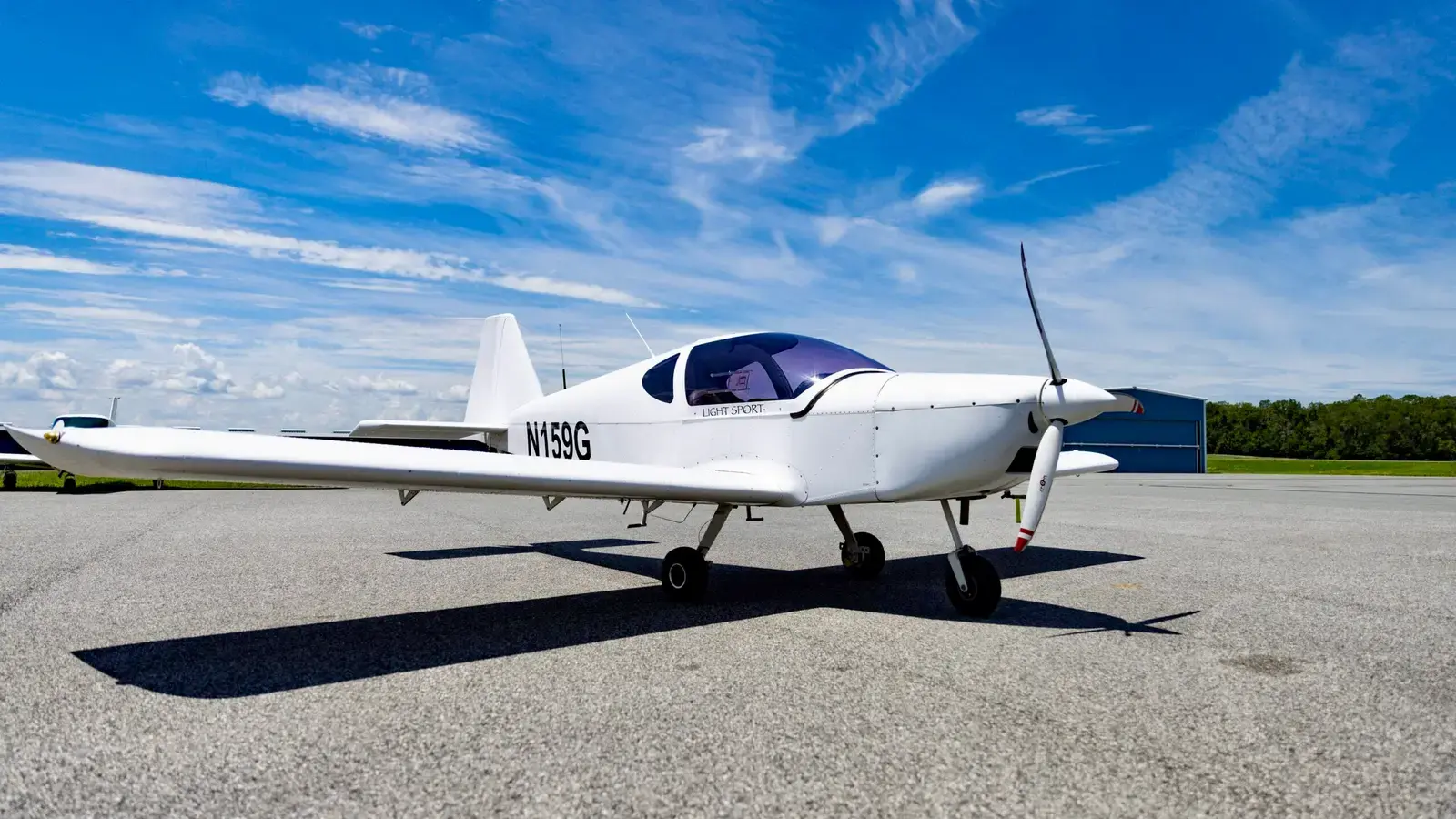
People call it a "private pilot license." The FAA calls it a private pilot certificate, and the requirements for an airplane are spread across several sections of 14 CFR Part 61. This is the whole list in one place, in the order you'll meet it, with links to the regulation for each item and to our longer guides.
1. The basic eligibility rules
To be eligible for a private pilot certificate for airplanes, you must (14 CFR 61.103):
- Be at least 17 years old by the time you take the checkride.
- Be able to read, speak, write and understand English.
- Hold a student pilot certificate (or a sport or recreational certificate) first.
You can start earlier than 17. A student pilot certificate for airplanes requires age 16 (61.83), and 16 is also Merlin's minimum age. Our minimum age guide has the full set of age milestones.
2. A student pilot certificate
You apply in IACRA with your instructor. It's free, and you need it before you fly solo. The steps are in our IACRA guide.
If you aren't a U.S. citizen, TSA's Flight Training Security Program comes before flight training. Start with our TSA guide. U.S. citizens show proof of citizenship to their instructor, who keeps a record of it (a TSA rule, 49 CFR part 1552).
3. A medical
To use your student or private pilot privileges as pilot in command, the regulations generally call for at least a third-class medical certificate (61.23(a)(3)). There are exceptions (BasicMed, and the sport pilot driver's-license rule), but they have conditions, and BasicMed requires that you've held an FAA medical before. Get the medical early, before you've spent much on training. Our third-class medical guide walks through MedXPress and finding an examiner near Philadelphia.
A third-class medical lasts 60 calendar months if you're under 40 at the exam and 24 calendar months if you're 40 or older.
4. Ground training and the knowledge test
You need to learn the aeronautical knowledge areas in 61.105(b): regulations, charts and navigation, weather, aerodynamics, airplane performance, airspace, radio procedures, aeronautical decision-making and more.
Then an authorized instructor who taught you, or reviewed your home study, endorses you for the knowledge test (61.103(d), 61.35). It's 60 questions, 2 hours and 70% to pass, at a PSI testing center. Details and a study plan are in our knowledge test guide.
Your passing result is good for 24 calendar months. You have to finish the checkride within that window (61.39(a)(1)).
5. Flight training and solo
Before your first solo, your instructor must train you on specific pre-solo maneuvers, give you a pre-solo knowledge test and endorse your logbook. That endorsement is for the make and model you'll fly and must be renewed every 90 days (61.87). See first solo requirements.
Before you fly solo cross-country, you need more training and more endorsements (61.93).
6. The 40-hour minimum (61.109)
For a single-engine airplane, 61.109(a) requires at least 40 hours of flight time, including at least 20 hours of flight training with an instructor and 10 hours of solo flight. Inside those hours:
| Requirement | Minimum |
|---|---|
| Cross-country flight training with an instructor | 3 hours |
| Night flight training, including one cross-country over 100 nm total and 10 full-stop takeoffs and landings | 3 hours |
| Flight training by reference to instruments | 3 hours |
| Checkride prep with an instructor, within the 2 calendar months before the test | 3 hours |
| Solo cross-country time | 5 hours |
| One solo cross-country of 150 nm total, full-stop landings at 3 points, one leg over 50 nm | 1 flight |
| Solo full-stop takeoffs and landings at an airport with an operating control tower | 3 |
The night training isn't optional for an airplane certificate. The only exception, in 61.110, is for people who both train and live in Alaska.
Forty hours is a legal floor, not a budget. Most people need more, and how often you fly matters most. Merlin's cost estimate plans for 55 to 65 hours. Our itemized cost guide shows the math.
The control-tower requirement is easy to meet at Merlin. KPNE has an operating control tower, so the solo full-stop landings you make at home count toward it. See our KPNE student guide.
7. The checkride endorsement and the practical test
Before the checkride you need (61.39, 61.103(f)):
- Your knowledge test report, still inside its 24-month window.
- All the required training and aeronautical experience, logged.
- An instructor endorsement saying you've had training in the 2 calendar months before the test, you're prepared, and you've reviewed the areas you missed on the knowledge test.
- Your medical (if required) and a completed application in IACRA.
The checkride itself is an oral exam and a flight with an FAA examiner, graded against the Private Pilot Airman Certification Standards (FAA-S-ACS-6C). Read what to expect on checkride day and our 30-day prep plan.
The short version
- Turn 16, and get your medical early.
- Apply for your student pilot certificate in IACRA.
- Start lessons and ground school.
- Solo, then solo cross-country.
- Pass the knowledge test.
- Meet the 61.109 hours, get the endorsement, and pass the checkride at 17 or older.
Part 61 lets you do steps 3 to 5 in whatever order fits your schedule. If you want to know how Part 61 and Part 141 differ, we have a guide for that too.
The first step is a lesson, not paperwork. Book a discovery flight at Northeast Philadelphia Airport, or see the full training options and rates.
Ready to try it yourself?